

Ihi. Wehi. Mana.
1 Apr 2026
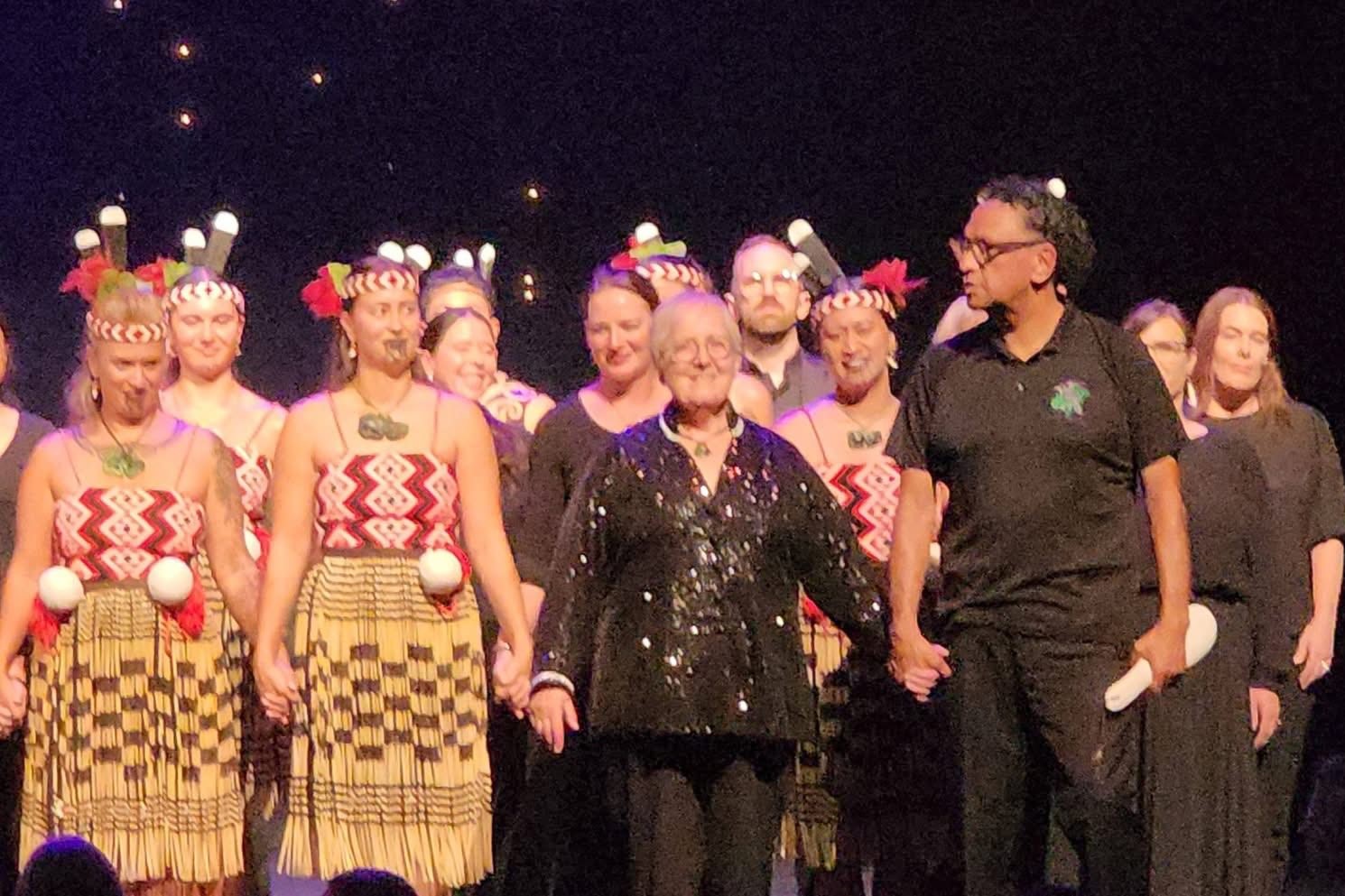
At the recent Auckland Arts Festival, members of Te Waka Huia joined with an invitational choir for an inspirational performance with Dr Karen Grylls.
This concert marked two significant anniversaries. The 45th anniversary of Te Waka Huia, one of New Zealand’s most successful and respected Kapa Haka groups, and the 30th anniversary of the first formal collaboration between Te Waka Huia and Dr Karen Grylls and the national choirs.
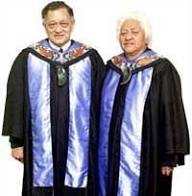
In the early-1990s, Karen Grylls met the Wehis through Aroha Cassidy-Nanai, a member of Te Waka Huia and the collaboration started. Karen explains:
"Over a cup of tea in the Westlake Girls’ High School staff room in 1993 Aroha Cassidy laid down a challenge to Elise Bradley, the then Head of Choral Music: “why don’t you fellas sing Māori Music?” After a few exchanges, a deal was wrought: “Alright, I’ll teach you fellas Māori, if you teach my fellas how to sing!’ And that’s how it all began. Every year, Key Cygnetures (the school’s premier choir) and Elise Bradley were gifted a new piece by the Wehi Whānau, tutored by Aroha, then HoD Māori at Westlake Girls".
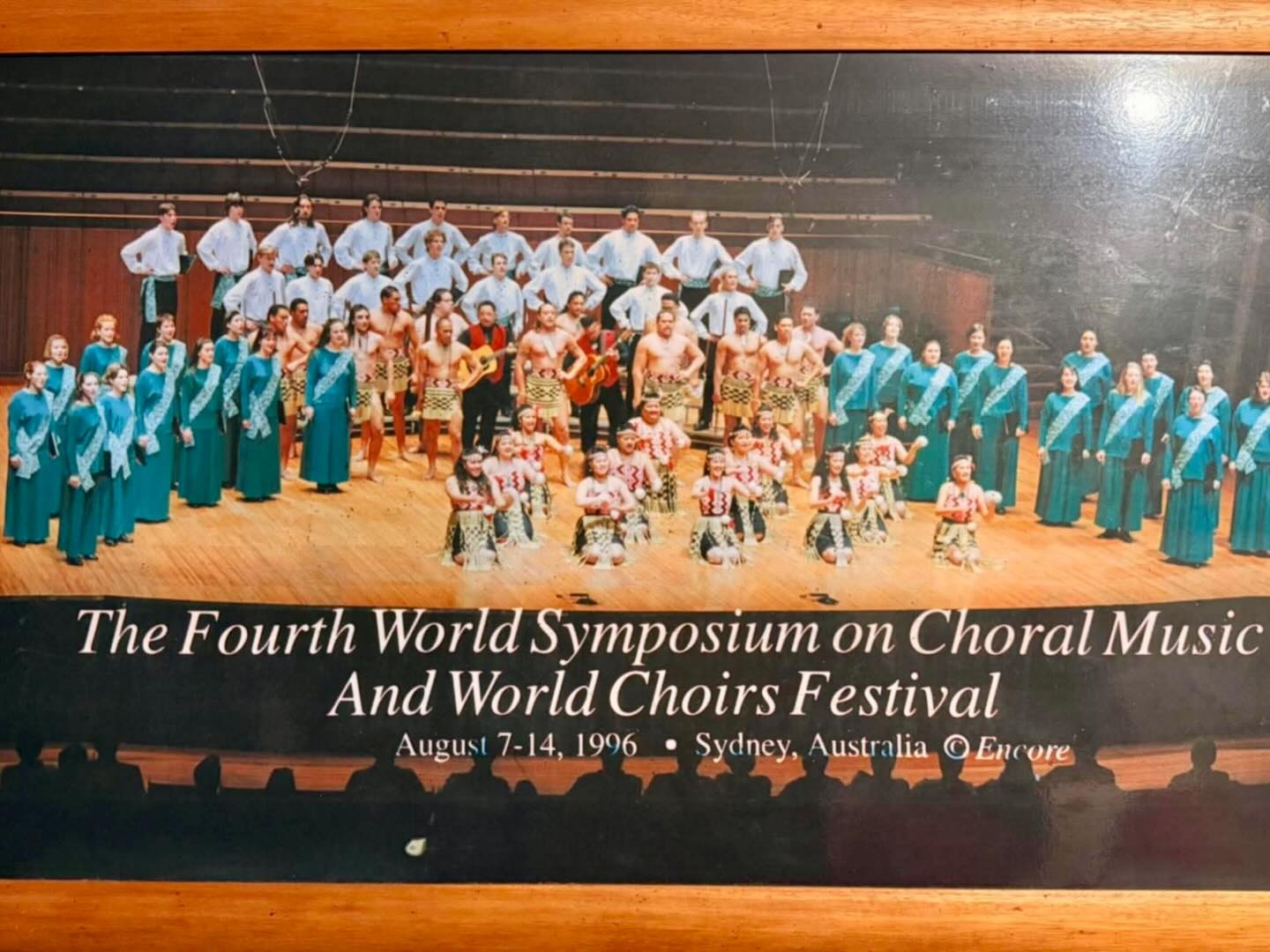
The relationship between Karen Grylls and the Wehi whanau established at that time has remained and grown over the years. Karen has worked with Ngāpō, Pimia and the Kapa on their music for Te Matatini. Reciprocity saw Kapa members teaching Māori action songs to various choirs. Other highlights have included singing together at Sing Aotearoa also in 1996, and the New Zealand National Youth Choir and Te Waka Huia together in a Māori operatic production, Tete Kura (composed by Ngāpō Wehi and Helen Fisher), at the Wellington Festival in 2000.
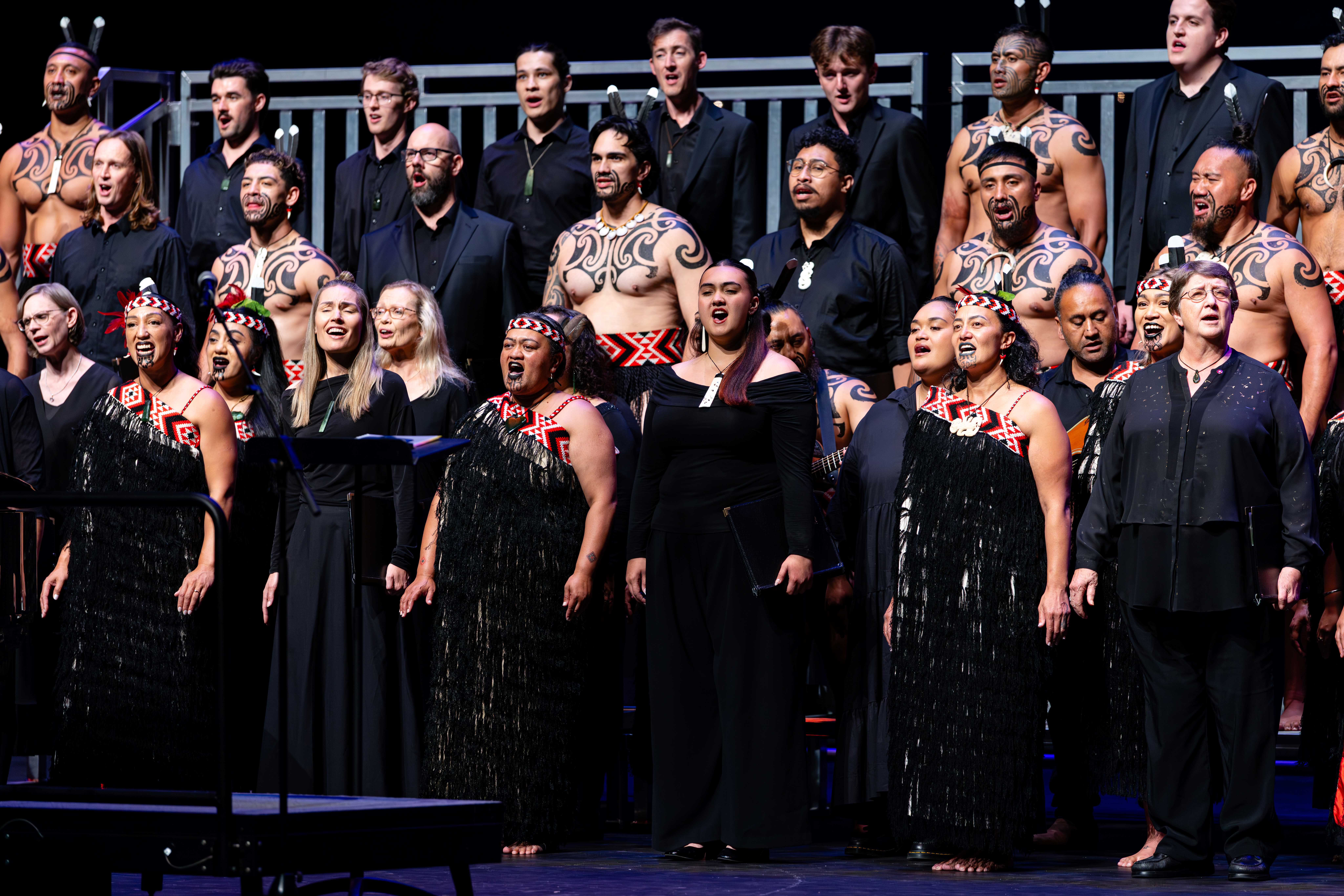
“The moment that the choir stood with Te Waka Huia on stage, and sang the gifted waiata which everyone knew, was a moment none of us will forget.” - Karen Grylls
The choir sang the world premiere of Ihi. Wehi. Mana. - composed by Robert Wiremu, with kupu by Ataahua Papa – which gave the concert its name. The beautiful kupu talk about weaving voices into one and bringing two worlds together. Robert Wiremu has said –
“The commissioned waiata (?), "Ihi.Wehi.Mana" virtually wrote itself - the kupu that Ata Papa wrote were so apt, although the translation hadn’t yet been decoded to the various dedicatees at the time. These were the motivated people who were inspired to embed Māori music and language into the national choral culture without cringe or awkwardness, who audaciously dared to step away from the old paradigm of using Māori songs as source material to authenticity, a new authenticity that respected both cultures equally. Those inspired people could never have known how this embryonic idea would grow and how it would be embraced by generations of singing musicians. What an amazing ride this has been!”
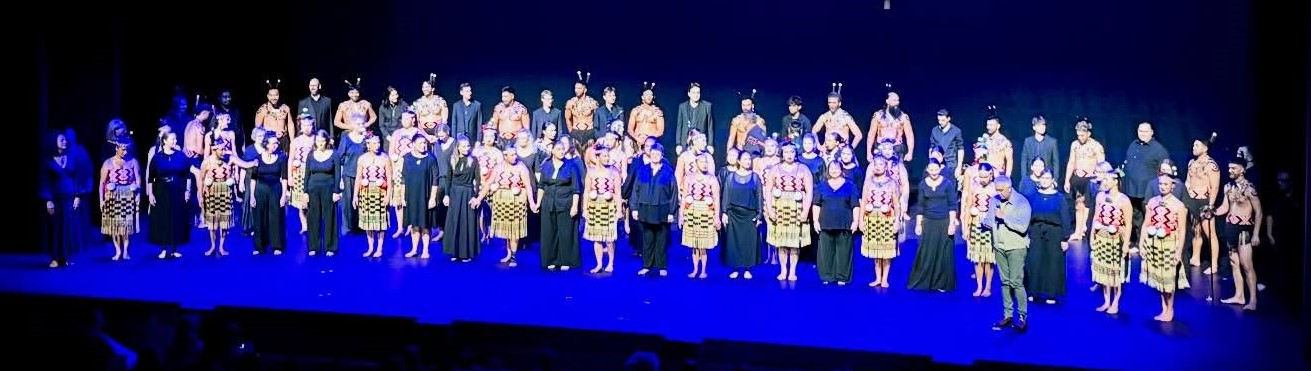
The concert impressed the critics - "While the two groups excelled in their own forms – the choirs performing first, Te Waka Huia performing second – the drawing card was seeing them perform together. The gorgeous, beautiful, high notes of the choirs blending with the lower notes of the kapa haka ropu was a sound I’ve never heard before. It’s a shame that these one-off events are just that, one-off, but if there’s a place for them, it’s the festival, and if there’s a venue for them, it’s the Dame Kiri Te Kanawa. A definite standout of the three weeks for me." (Sam Brooks, Critical Corner: Auckland Arts Festival Week Three Round-Up)
The performances also made a deep impact on the performers - “It was a privilege and an honour to sing in this concert with choir friends from several decades, under the musical direction of Karen Grylls. Memories of Robert Wiremu’s beautiful waiata, and the thrill of performing the music of the Wehi whānau with Karen and Te Waka Huia will stay with me for many years.” Choir participant Maria Winder
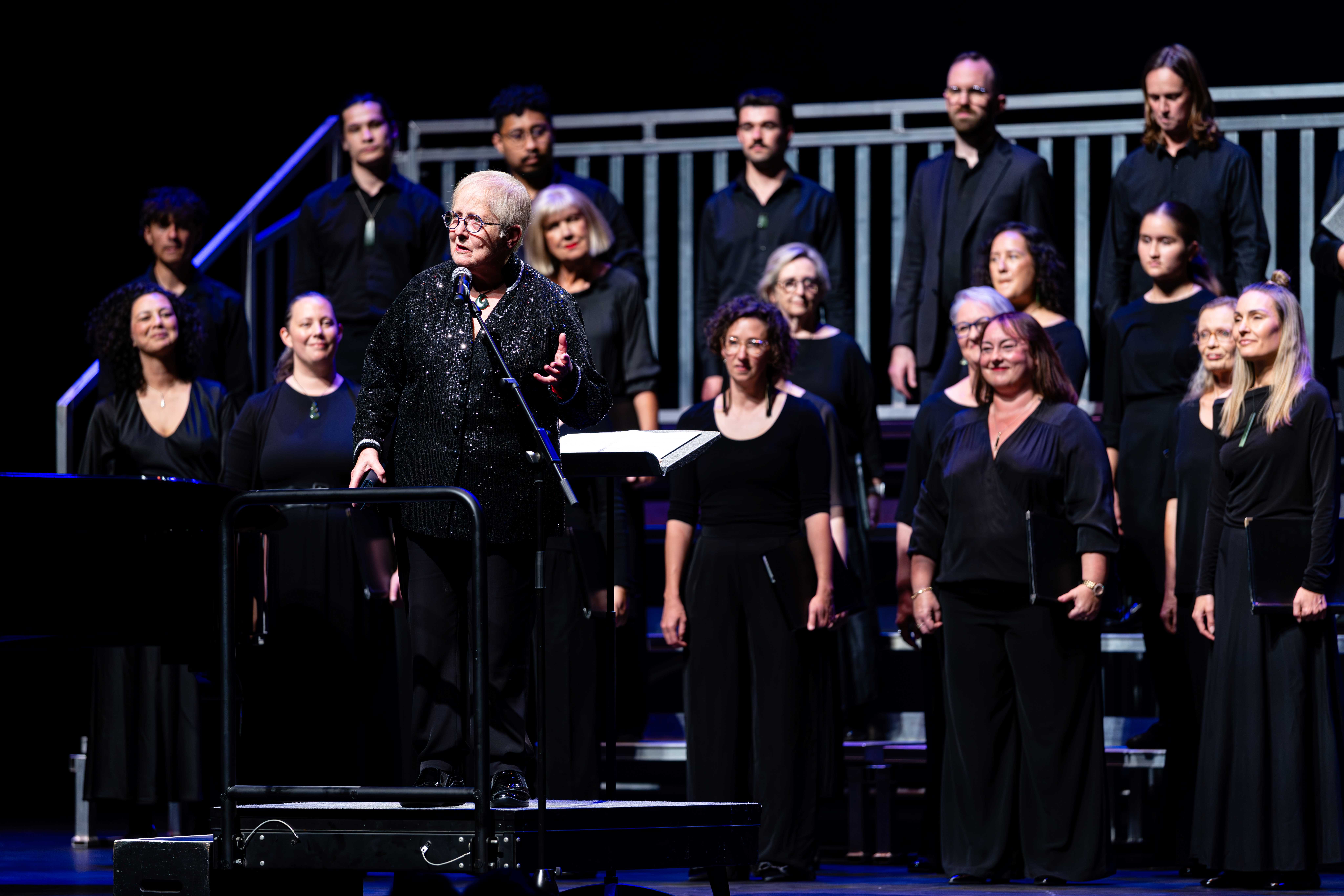
After Karen’s recent concert at the New Zealand Festival marking her retirement as the Artistic Director of Choirs Aotearoa New Zealand, this concert was another keynote performance, marking her remarkable career.
At both shows, the audiences rose to their feet, cognisant of this historical moment in kapa/choral history.
You may be interested in hearing more:
RNZ interview - Tapeta Wehi and Karen Grylls reunite for Ihi. Wehi. Mana. | RNZ